Time tracking in Odoo: how it works.
Almost every company that comes to us for time tracking runs it the same way: a clock on the wall, a spreadsheet for everyone else, and a payroll office that pieces it together at the end of the month. It works. Until someone asks for the numbers and no one can back them up quickly.
Odoo does it differently. Clock-ins, absences, planning and payroll live in one system. No loose sheets, no double entry, no monthly reconciliation between two tools. Here is how it works, and how we set it up.

Why time tracking in Odoo.
Odoo’s attendance module brings time tracking, leave and reporting together in one place. You switch on only what you need and scale up without rebuilding the system.
The difference is in the connection. The hours you record flow through to payroll and to planning. Leave and sickness show up in attendance automatically. Project hours link to invoicing. Your HR team closes the month without retyping spreadsheets, and every entry stays traceable per employee and per device.
What the 2027 obligation means.
From 2027, the Belgian government wants every employer to record working hours digitally. A wall clock or a spreadsheet will not be enough. A time tracking system like Odoo Attendances covers that requirement, andgives you the audit trail a labour inspection can ask for.
The exact status of the law, the date, and what it means per sector are on our page about mandatory time tracking in 2027. This article focuses on how the software itself works.
Read more about mandatory time tracking in 2027 .
The core features.
Clock in and out in real time
Employees clock in on a kiosk tablet on the floor, on the mobile app, or straight from their browser. The dashboard shows who is working, who has finished, and who is building up overtime. Daily and weekly totals are calculated without external formulas.
Mobile and location-aware
People who work on the road or from home clock in on their phone, with a timestamp and optional location. Field teams log their hours without coming back to the office.
Overtime, breaks and shifts
The rules calculate night, holiday and overtime premiums without separate spreadsheets. Contractual limits raise a flag before you cross them. You plan rotating shifts with templates.
Reporting
Dashboards compare periods and show where time goes, per project, client or location. Exporting to Excel or for your payroll office takes a few clicks.
What we do in an implementation
We do not just switch time tracking on. We start with how your business runs: which shifts, which schedules, which links to payroll and accounting.
Where the standard is enough, we keep it standard. Where it does not fit, we say so, and we solve it with configuration or targeted development. We connect the hours to payroll so there are no intermediate files, and we train your key users so the system keeps running after go-live without us.
How we approach an implementation.
We work in phases. Each phase has a clear goal, and we validate it with your team before moving on.
Analysis: We map your current process and define the needs. Kick-off with the project team, a clear scope, and the gaps between what Odoo does out of the box and what you need.
Implementation: We configure Odoo to your shifts, schedules and rules. Where needed, we build custom work or integrations, for example with your payroll office.
Transition: We test with key users, fix what surfaces, and move your people over. Training is part of this.
Go-live and after: Odoo goes live with close support. After the start, our support team takes over, with the same people who know your system.
Why Dynapps?
We are the largest Odoo implementation partner in Europe, with teams in Belgium, the Netherlands, France, Switzerland and Spain. We work as an Odoo Gold Partner and we are ISO 27001 certified. In 2024, the Odoo Experience Days named us Best Odoo Implementation Partner in Europe.
What that means for you: consultants who already know your industry before the first workshop, and a team that stays after go-live. The people who scope your project are the same ones who build it and who move it to the next Odoo release three years from now.
Everything you need to know about time tracking in Odoo.
Can't find the answer you're looking for? Please reach out to us.
Odoo's attendance module brings time tracking, leave and reporting together in one place. Employees clock in on a kiosk tablet, in the mobile app or in their browser. The hours flow through to payroll and planning, leave and sickness show up in attendance automatically, and project hours link to invoicing. Every entry stays traceable per employee and per device.
Yes. People who work on the road or from home clock in on their phone, with a timestamp and optional location. Field teams log their hours without coming back to the office. The dashboard shows who is working, who has finished and who is building up overtime.
Yes. The rules calculate night, holiday and overtime premiums without separate spreadsheets. Contractual limits raise a flag before you cross them, and you plan rotating shifts with templates. Daily and weekly totals are calculated without external formulas.
Yes. Dashboards compare periods and show where time goes, per project, client or location. Exporting to Excel or for your payroll office takes a few clicks. In an implementation, Dynapps connects the hours to payroll so there are no intermediate files.
In phases, each validated with your team before moving on. The analysis maps your current process and the gaps between standard Odoo and your needs. The implementation configures Odoo to your shifts, schedules and rules, with custom work or integrations where needed, for example with your payroll office. The transition covers testing with key users and training. After go-live, the support team takes over, with the same people who know your system.
Discover what Odoo can do for your business.
A first conversation to see if we fit, followed by a demo built around your processes.
More posts like this

6-minute read
Peppol mandatory, e-reporting from 2028: how to prepare.
Since 2026, e-invoicing via Peppol is mandatory in Belgium. From 2028, your invoice data goes to the tax authority in near real time. What that asks.
6 minute read
Choosing an Odoo integrator: 5 questions to ask
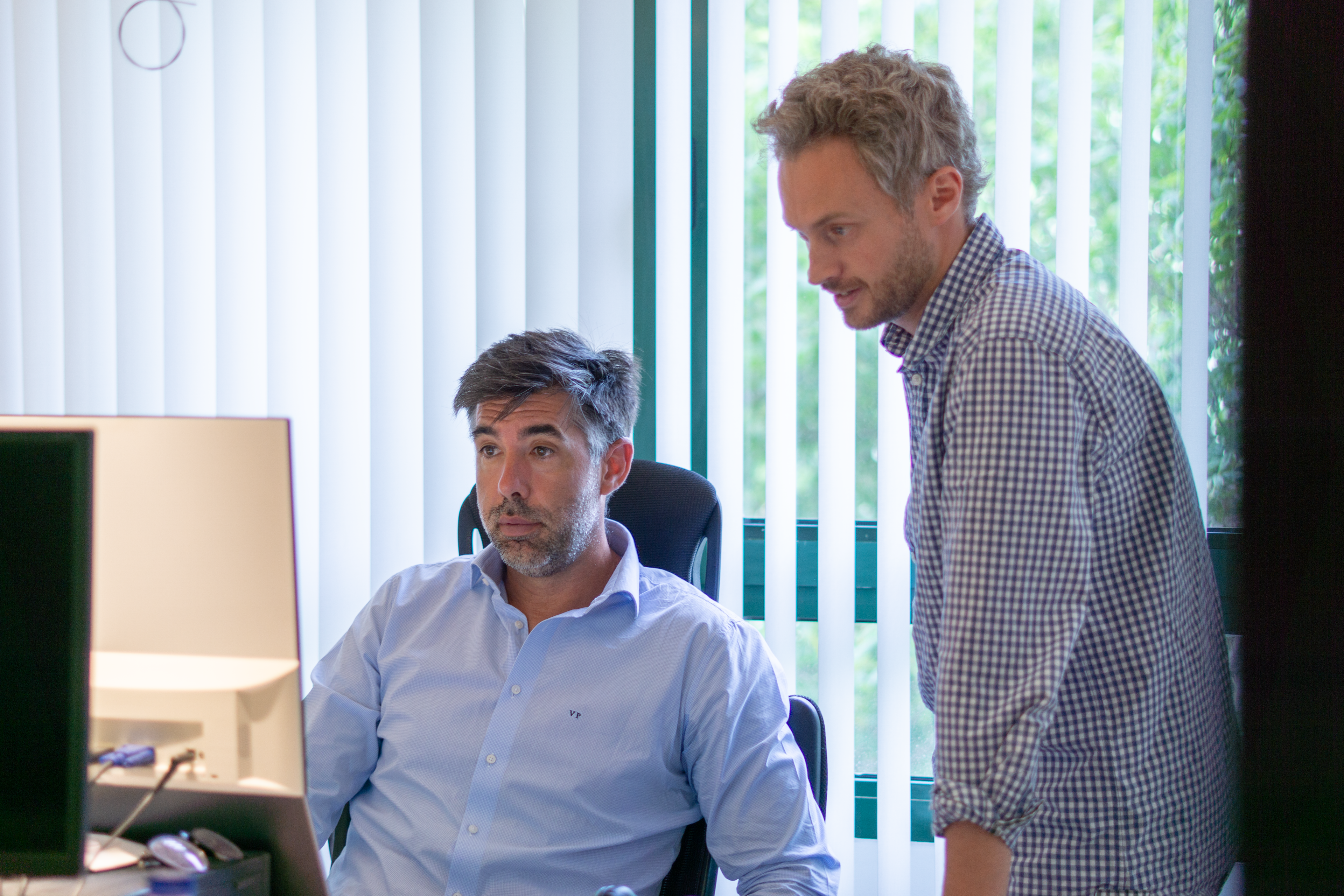
There are generally five main criteria that can help you effectively evaluate Odoo integrators. However, a reliable assessment depends first and foremost on what you’ve prepared before the call.

3-minute read
Interview with Leïla Chojnacki, Deputy CEO and CFO of the Obiz Group
3 min read
Odoo 19.4: What's new? Key features and essential takeaways
Odoo 19.4 (July 2026) is a quarterly update: connection to AI agents via MCP, voice interaction, editable margins, two-tier duplicate detection, stock aging report, and continuous production.
3 minute read
AI in Odoo: What are the requirements for enabling it?
The question "Do we have the right to use Odoo's AI?" often has a simpler answer than expected.

4 min read
Certified by Dynapps: bringing Odoo expertise to local SMEs in France
Dynapps France is rolling out the Certified by Dynapps label, a program that gives small and medium-sized businesses local Odoo expertise and gives independent consultants a structured way to grow around Odoo.
4 min read
Dynapps named Best Odoo Partner in Europe
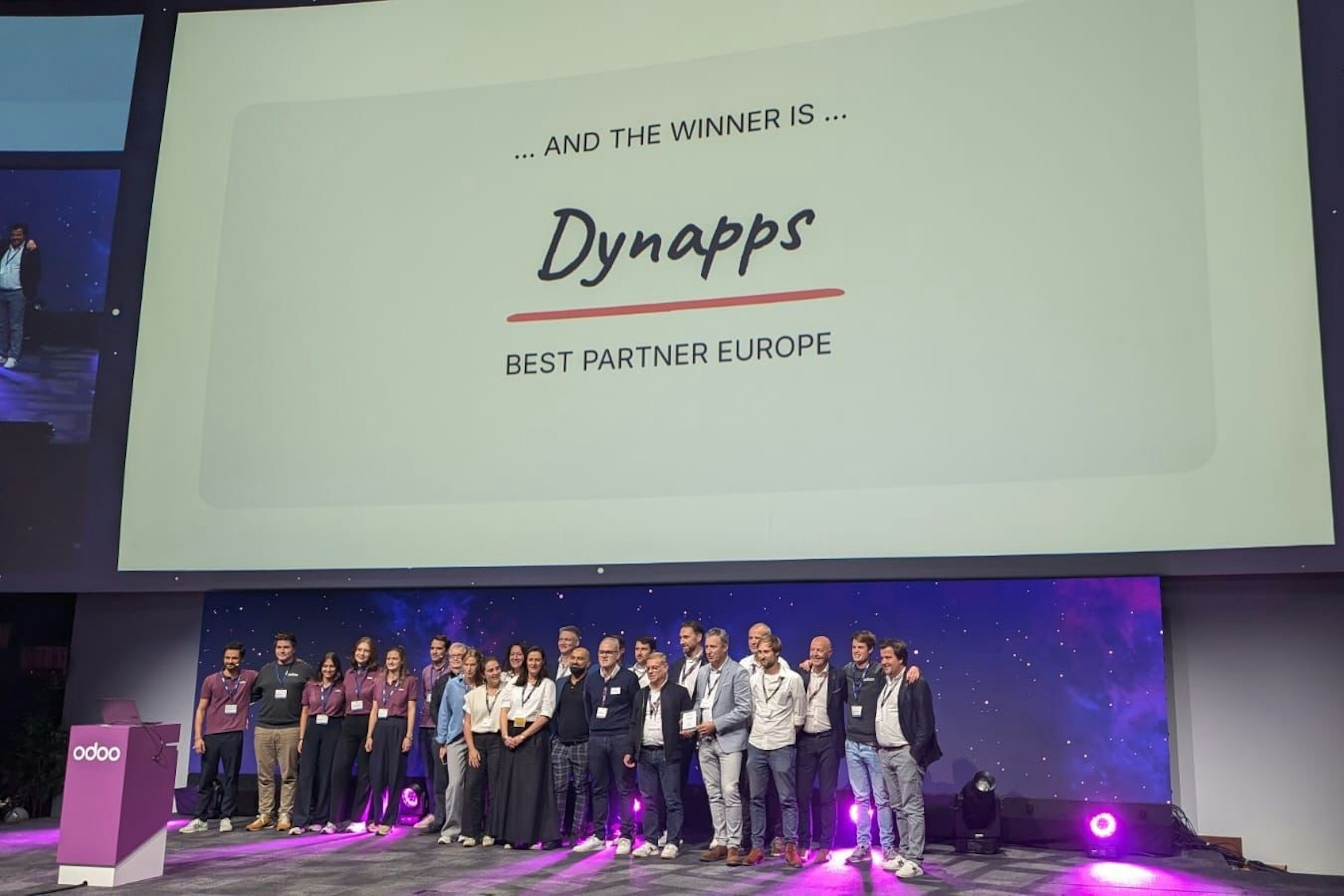
At the Odoo Experience Days in Brussels, Dynapps won the title of Best Odoo Implementation Partner in Europe, with former CEO Karel Hendrickx and the team collecting the award on 2–4 October 2024.
3 min read
Dynapps recertified to ISO/IEC 27001:2022 with zero non-conformities
Dynapps holds the ISO/IEC 27001:2022 certificate for its information security management system across its Belgian and Dutch entities. The January 2026 recertification audit closed with zero non-conformities.
4 min read
ERP vs CRM: what is the difference?
In a competitive market, businesses lean on software to operate efficiently. Two systems come up most: ERP and CRM. They serve different purposes, and they often work better together than apart.
6 min read
Odoo or Exact: which ERP fits your SME?
Choosing an ERP changes how the business runs. Odoo and Exact both target SMEs, but they solve different problems. This is a side-by-side read on functionality, flexibility, support, and where each one fits.