Peppol mandatory since 2026, e-reporting from 2028: how to prepare.

It often goes like this. The government announces a new tax obligation, the deadline is still far away and the file drops to the bottom of the pile. That is what happened with Peppol at many Belgian companies. Since 1 January 2026, e-invoicing via Peppol is mandatory, and those who started late had to find a solution fast.
The next step is already set: e-reporting starts on 1 January 2028. This post covers what applies now, what changes in 2028 and why you are better off handling it in your ERP than with a standalone connector.
1 January 2026: Peppol mandatory for B2B invoices between Belgian VAT-registered companies.
1 January 2028: e-reporting, with invoice data going to the Federal Public Service Finance in near real time.
1 July 2030: ViDA, with e-invoicing and digital reporting for intra-EU B2B.
What applies since 1 January 2026?
Every VAT-registered company in Belgium that invoices another Belgian VAT-registered company sends and receives those invoices as structured electronic invoices. The format is Peppol BIS Billing 3.0, based on the European standard EN 16931, and invoices travel over the Peppol network. A PDF sent by email is no longer enough.
The obligation applies regardless of company size. There are exceptions, including invoices to consumers, activities fully exempt from VAT (article 44 of the Belgian VAT Code) and foreign companies without a permanent establishment in Belgium.
Which fines do you risk without Peppol?
Fines increase step by step: 1,500 euro for a first infringement, 3,000 euro for a second and 5,000 euro from the third, with three months between two findings. The bigger risk is your cash flow. A customer cannot process a PDF as a valid invoice, so your payment is delayed.
What changes with e-reporting in 2028?
From 1 January 2028, e-reporting starts: your invoice data goes to the Federal Public Service Finance in near real time. The tax authority sees transactions as they happen, not afterwards.
What was a technical connection in 2026 becomes a question of data quality in 2028. VAT codes, customer data and credit notes must be correct the moment you send the invoice. You can no longer quietly fix an error in the VAT return.
And in 2030, ViDA follows.
At European level, the ViDA package (VAT in the Digital Age) makes structured e-invoicing mandatory for intra-EU B2B transactions from 1 July 2030, with digital reporting. If you invoice customers in other EU countries, the rule applies there too. On 11 September 2026, the Netherlands announced that it will also make domestic B2B e-invoicing mandatory from that date.
A PDF is not an e-invoice.
A PDF is a picture of an invoice. A Peppol invoice is a structured file that your customer's accounting software reads without retyping. That is why the invoice must be right before it leaves: the correct VAT number, the correct VAT code and a valid Peppol address for the recipient.
A connector or your ERP?
Under time pressure, companies often add a standalone connector to their existing invoicing tool. That solves sending, but not the source. The data stays in a system that was not built for it, and every link is a place where things can go wrong.
For e-reporting in 2028, that source is what counts. If you handle Peppol in your ERP, you send, receive and book invoices in one chain, from the same data as your orders.
How Peppol works in Odoo.
Odoo is a Peppol access point itself.
You do not need a separate service provider. You register your company in Odoo with your company number or VAT number. Registration is free, also in Odoo Community.
Send from the invoice.
When you send an invoice, you choose Peppol. Odoo creates the file in Peppol BIS Billing 3.0 and sends it to your customer's Peppol address.
Receive without retyping.
Vendor bills arrive automatically in your purchase journal. Odoo checks for new documents several times a day.
One chain from order to booking.
Sales, purchase, inventory and accounting share one database. The invoice comes from the same data as the order, and that is the basis you need for e-reporting. How accounting works in Odoo is on Odoo Finance.
Where do you start?
Check that your Peppol registration is active and that your customers and suppliers are reachable on the network.
Review your master data: VAT numbers, company numbers and VAT codes.
Map which invoices still run outside Peppol, such as credit notes or invoices from other systems.
Decide whether your current invoicing tool can handle e-reporting in 2028, or whether moving to Odoo makes more sense.
Plan that move well before 2028, not in the last quarter of 2027.
Why Dynapps?
Dynapps is an Odoo Gold partner with 900+ customer references and 280+ Odoo experts. We set up Peppol as part of your accounting and your order-to-invoice process, not as a standalone link. You are ready for Peppol today and for e-reporting in 2028.
Frequently asked questions about Peppol and e-reporting.
Is Peppol mandatory in Belgium?
Yes. Since 1 January 2026, VAT-registered companies in Belgium send and receive their invoices to other Belgian VAT-registered companies as structured e-invoices over the Peppol network. The format is Peppol BIS Billing 3.0, based on the European standard EN 16931. The obligation applies regardless of company size. Invoices to consumers are excluded, as are activities fully exempt from VAT and foreign companies without a permanent establishment in Belgium.
Which fine do you risk if you do not invoice via Peppol?
Fines increase per finding: 1,500 euro for a first infringement, 3,000 euro for a second and 5,000 euro from the third, with three months between two findings. Your cash flow is also at stake. Between Belgian VAT-registered companies, a PDF is no longer a valid invoice, so your customer cannot process it correctly and your payment is delayed.
What is e-reporting and when does it start?
E-reporting starts on 1 January 2028. From then on, your invoice data goes to the Federal Public Service Finance in near real time, as transactions happen. That makes data quality more important than today: VAT codes, customer data and credit notes must be correct the moment you send the invoice. The technical details are still to follow, so keep an eye on the publications of the Federal Public Service Finance.
Can you still send a PDF invoice?
Not between Belgian VAT-registered companies. A PDF is a picture of an invoice, while a Peppol invoice is a structured file that your customer's accounting software reads automatically. To consumers, you can still send a PDF or paper invoice. For customers abroad, the rules of that country apply, and from 1 July 2030 the European ViDA rules for intra-EU B2B invoices.
Can Odoo send and receive Peppol invoices?
Yes. Odoo is a Peppol access point itself, so you do not need a separate service provider. You register your company in Odoo with your company number or VAT number, and registration is free, also in Odoo Community. You send outgoing invoices from the invoice in Peppol BIS Billing 3.0. Vendor bills arrive automatically in your purchase journal.
Is a Peppol connector on your current tool enough for 2028?
For sending invoices, a connector can be enough. For e-reporting, the source counts. If your customer data, VAT codes and credit notes sit in a different system than your orders, every link increases the risk of errors that go straight to the tax authority. Map where your invoices come from first. Then decide whether a connector is enough or whether invoicing belongs in your ERP.
Discover what Odoo can do for your business.
A first conversation to see if we fit, followed by a demo built around your processes.
More posts like this

3-minute read
Interview with Leïla Chojnacki, Deputy CEO and CFO of the Obiz Group
3 min read
Odoo 19.4: What's new? Key features and essential takeaways
Odoo 19.4 (July 2026) is a quarterly update: connection to AI agents via MCP, voice interaction, editable margins, two-tier duplicate detection, stock aging report, and continuous production.
3 minute read
AI in Odoo: What are the requirements for enabling it?
The question "Do we have the right to use Odoo's AI?" often has a simpler answer than expected.

4 min read
Certified by Dynapps: bringing Odoo expertise to local SMEs in France
Dynapps France is rolling out the Certified by Dynapps label, a program that gives small and medium-sized businesses local Odoo expertise and gives independent consultants a structured way to grow around Odoo.
4 min read
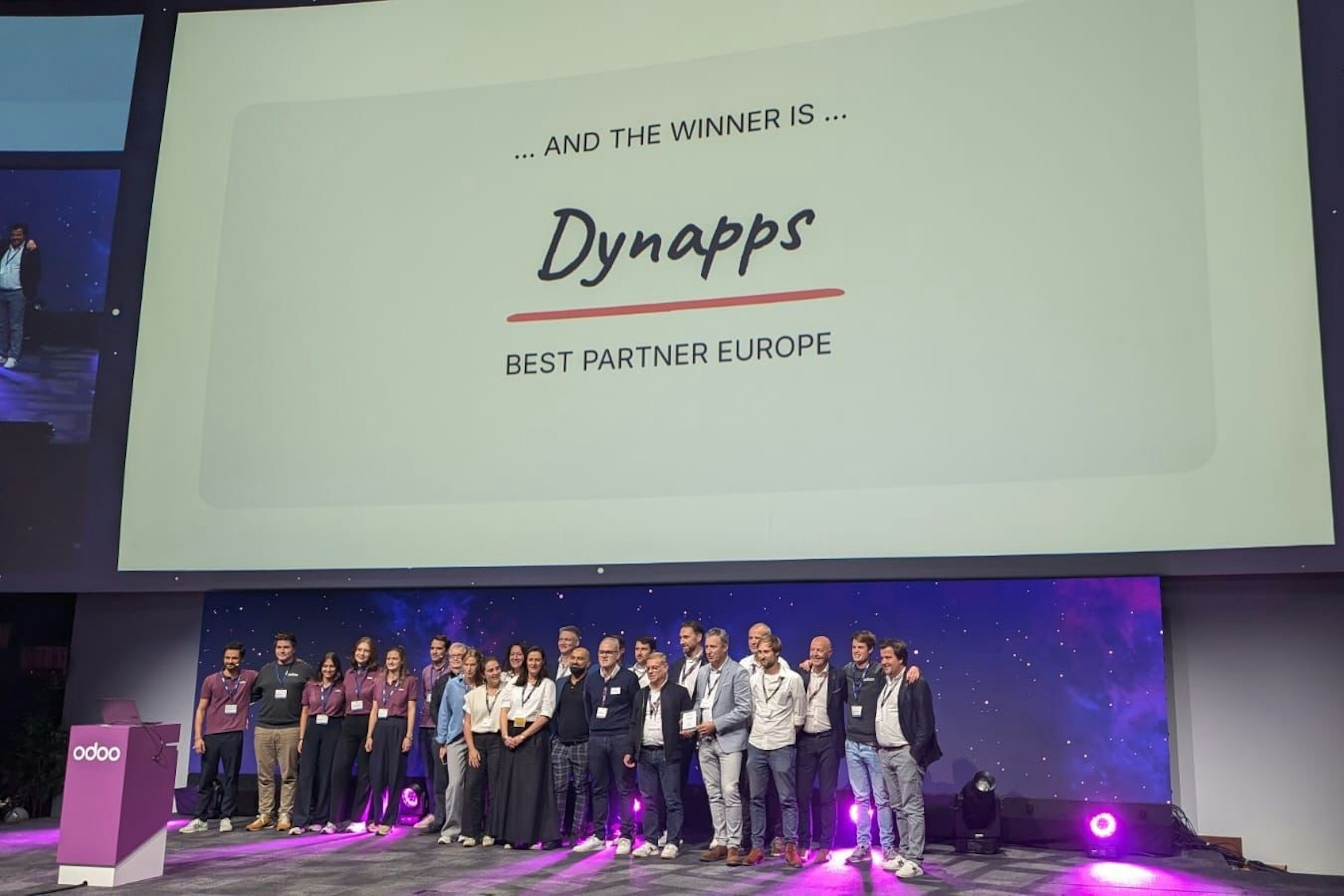
Dynapps named Best Odoo Partner in Europe
At the Odoo Experience Days in Brussels, Dynapps won the title of Best Odoo Implementation Partner in Europe, with former CEO Karel Hendrickx and the team collecting the award on 2–4 October 2024.
3 min read
Dynapps recertified to ISO/IEC 27001:2022 with zero non-conformities
Dynapps holds the ISO/IEC 27001:2022 certificate for its information security management system across its Belgian and Dutch entities. The January 2026 recertification audit closed with zero non-conformities.
4 min read
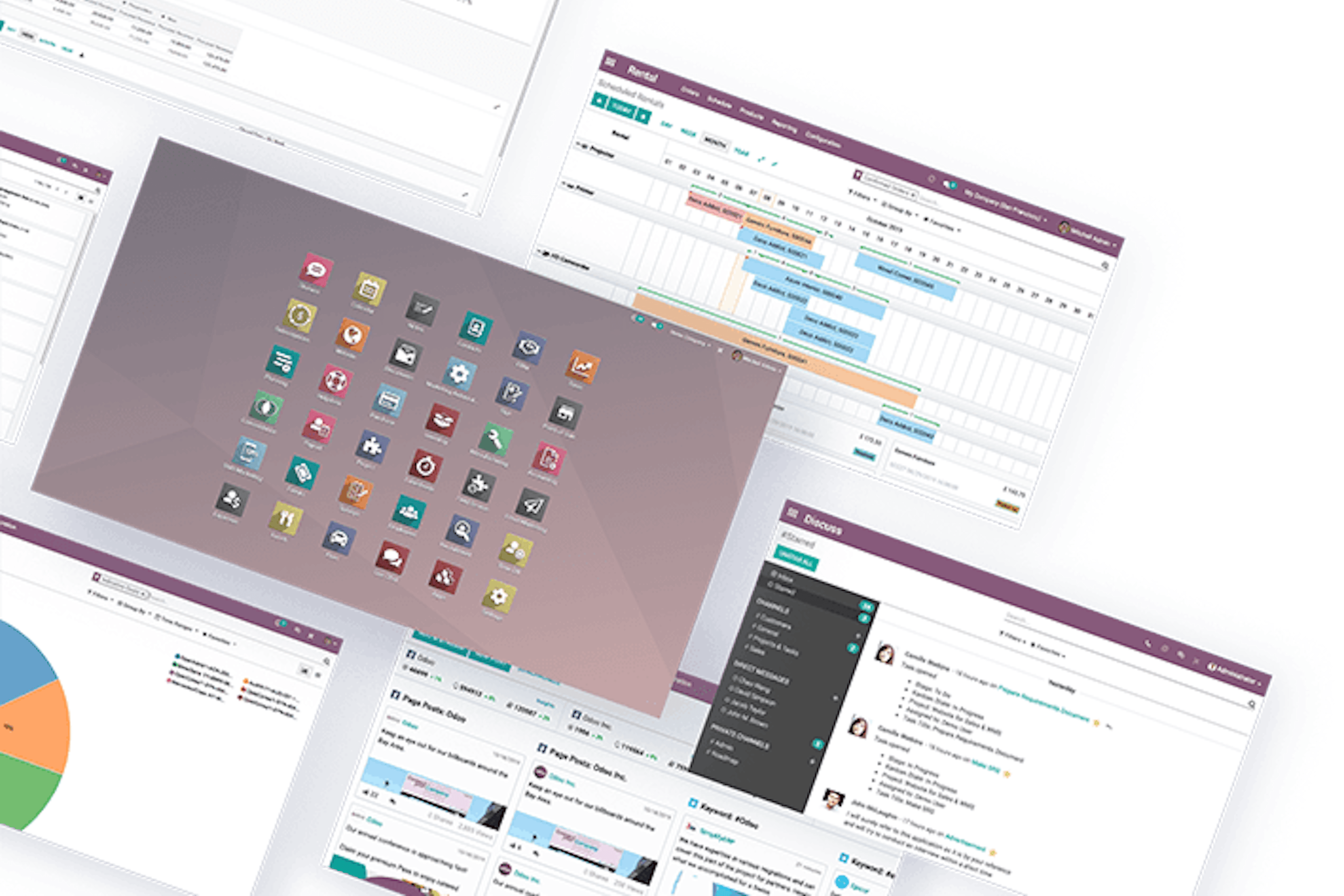
ERP vs CRM: what is the difference?
In a competitive market, businesses lean on software to operate efficiently. Two systems come up most: ERP and CRM. They serve different purposes, and they often work better together than apart.
6 min read
Odoo or Exact: which ERP fits your SME?
Choosing an ERP changes how the business runs. Odoo and Exact both target SMEs, but they solve different problems. This is a side-by-side read on functionality, flexibility, support, and where each one fits.
4 min read
Odoo vs AFAS: comparing two ERP systems built for SMEs in NL and BE
A side-by-side comparison of Odoo and AFAS, two ERP systems built for SMEs in the Netherlands and Belgium. It weighs flexibility, user-friendliness, support, integrations and cost per system.
7-minute read
Digital transformation: what it is, and how to actually do it.
Digital transformation is a worn-out phrase. Behind it sits a real question: does your business still run on disconnected tools, manual steps, and spreadsheets nobody fully trusts? This is what digital transformation actually means, why it matters, how to do it step by step, and the mistakes that sink it. Without the buzzwords.