The business is ready to grow. The systems are not.
Building the systems to support the next phase of growth is one of the most decisive moves a scaling business can make. It touches how much volume you can take on, how fast you can enter a market, and how cleanly you can absorb the next acquisition. The companies that get it right do not just add headcount to keep up. They build a platform that grows with the business instead of against it.

ISO 27001
certified
900+
customer references
280+
Odoo experts
05
countries
Building for scale without losing momentum.
The business is winning. New markets, new customers, acquisitions on the table. But the systems and processes that worked at the current size start to strain at the next one, and headcount creeps up just to keep pace. The challenge is not working harder. It is building a platform that absorbs more volume, more complexity, and more entities without adding friction at the same rate.
Growth means more people, just to keep up.
The processes that ran fine at the current size start to crack at twice the volume. Manual steps that were a minor annoyance become a daily bottleneck. To keep up, the business hires more people into operations, finance, and admin. Revenue grows, and the cost of running it grows almost in step.

The system becomes the ceiling.
New markets mean new currencies, new tax rules, new languages the system was never set up for. A promising acquisition stalls for months while someone works out how to wire it in. Opportunities get delayed or turned down, not because the business cannot handle them, but because the systems cannot. The platform that should enable growth starts to cap it.
Pressure to grow, a back office that cannot keep pace.
The board, the investors, and the plan all point to faster growth. Meanwhile the back office runs on spreadsheets and manual reconciliation that already creak at today’s size. Leadership flies partly blind, because real-time numbers across a bigger, more complex business are not there to fly by. The ambition is set; the engine underneath is not built for it.

From a growth ceiling to a growth platform.
The right partner builds for where the business is going, not just where it is today. We design a platform that takes on more volume, more entities, and more markets without a rebuild each time, multi-currency, multi-company, and multi-language ready from the start. Manual steps that scale badly get automated, so growth stops meaning more headcount. And it stays standard where it can, so each new market or acquisition is a configuration, not a project.
What this looks like in practice
Businesses built to scale.
- Energy & utilities

Energy & utilities
Sensorfact replaced gut-feel purchasing with Odoo
Dutch climate-tech scale-up, 200+ people serving 1,600 industrial customers in 40 countries. Odoo replaced gut-feel purchasing with one system for purchase, inventory, accounting and sales in five months.
- Energy & utilities
Energy & utilities
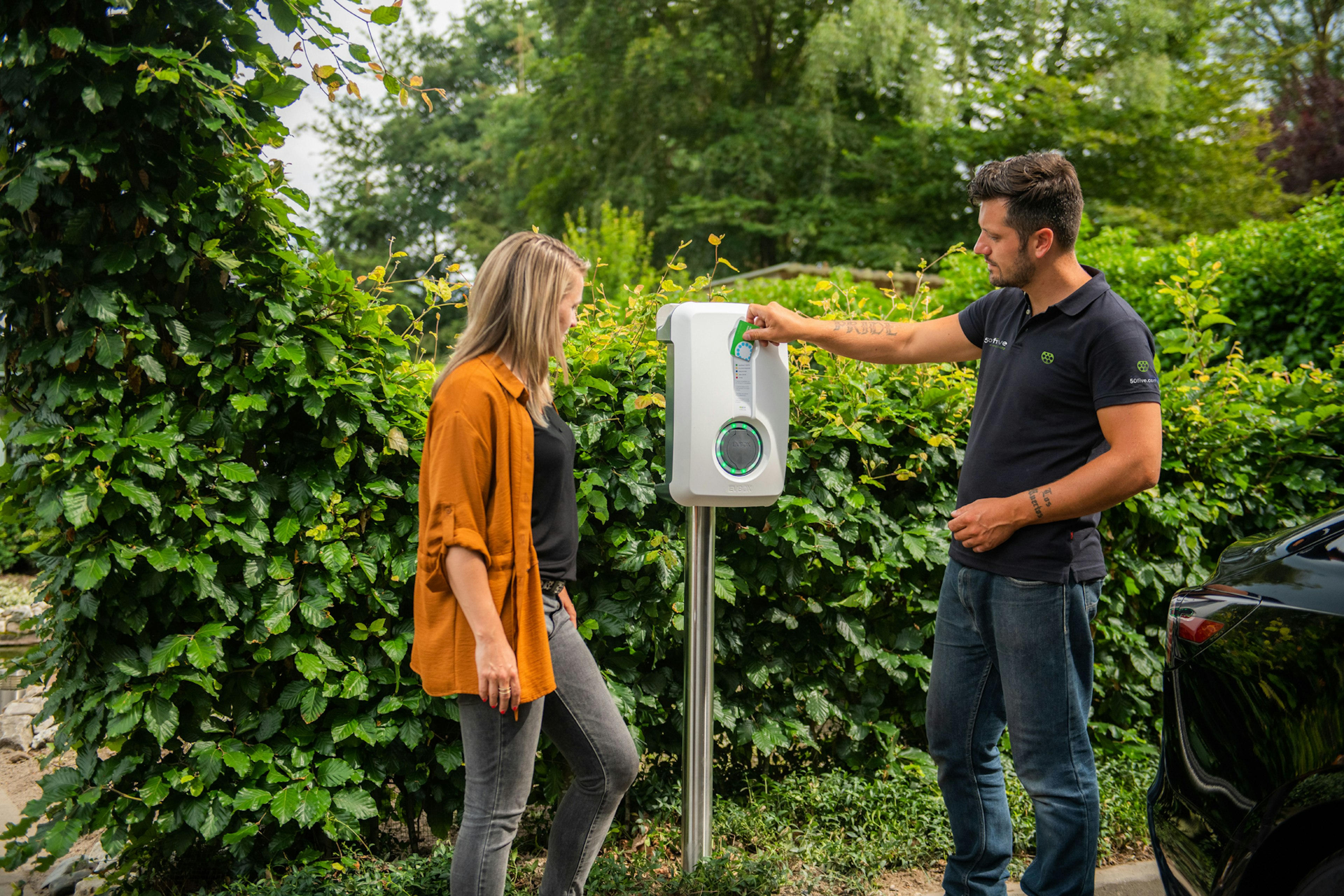
One Odoo backbone, twelve European countries, one platform
50Five carried one Odoo platform from a 2016 Dutch smart-home distributor to a B2B EV charging operator running 600,000+ charge points across twelve European countries, without forking the system.
- Financial services

Financial services
One Odoo backbone, from 100 to 36,000 leased bikes.
Cyclis Bike Lease grew from a four-founder startup in Hasselt to 36,000+ leased bikes. Dynapps replaced the founders’ DIY setup with a single Odoo platform that scales with the business.
Related challenges
Other patterns we see often.
Sound familiar?
Replacing a legacy ERP
A 10-to-20-year-old system at the centre
of operations, too critical to touch.
Consolidating operations
Multiple entities, multiple systems, one company that cannot see the full pictures.
Untangling disconnected systems
Production in one system, CRM in another, finance in a third. Nobody trusts the numbers.
Recovering an Odoo that is not working
Already on Odoo. Still not getting what was promised.
Same challenge, different reality
How this pain shows up across industries.
The legacy ERP problem is universal in mid-market. The shape it takes is not. Same root, different symptoms.
Manufacturing
Production floor, finance, and supply chain in the same language.
Professional services
Projects, people, and P&L, running off one model.
Retail & wholesale
Brick, click, and warehouse. One stock. One view.
Logistics
Multi-warehouse, multi-country, one operational backbone.
Energy & utilities
Installers, operators, producers, cooperatives. Each on Odoo, shaped to fit.
Laboratories
From sample to result. LIMS for in-house and commercial labs.
Food & beverage
The full food and drink chain, traceable from raw material to shelf.
Pharma & biotech
Batch traceability, GxP, and quality, ready for any audit.








The questions before you commit.
Building for the next phase of growth raises real questions about timing, cost, how far ahead to build, and what happens when the next acquisition lands. Here are the ones we hear most, answered straight. If yours is not here, ask us.
Build now, within reason. The systems straining today will not get less strained as you grow, and a replacement done under pressure mid-growth is harder than one done with room to plan. That does not mean building a platform for a company ten times your size. It means building for the next realistic phase, two or three years out, so the system supports the growth instead of capping it. The blueprint is where we work out what that phase actually requires.
By building for the next phase, not the final one. We design for the volume, the markets, and the entities you can realistically see coming, using Odoo's standard multi-company and multi-currency capabilities that are already there to grow into. We do not custom-build speculative capacity you may never use. Standard-first keeps it that way: the platform can scale without paying upfront for scale you have not reached.
There is no list price, because it depends on where you are and where you are going. The main drivers are the current size, the growth you are building for, the number of markets and entities in the plan, and how much needs custom development versus standard configuration. Built right, the platform lowers the cost of growth: more volume and more entities without more admin headcount at the same rate. The blueprint puts a concrete number on the table, against the growth it is meant to support.
Odoo is built for it. One platform runs multiple currencies, languages, and local tax and accounting rules at the same time, so entering a new market does not mean a new system. A new country is set up as a configuration on the platform you already run, not a separate build. That is what lets a growing business open in a new market in weeks rather than starting an IT project every time.
A platform built for scale is built to absorb acquisitions. A new entity is added to the existing Odoo, with its own chart of accounts, currency, and local rules, and brought into group reporting from day one. Instead of every deal triggering a fresh integration project, onboarding becomes a repeatable process. For a buy-and-build strategy, that turns the systems from a brake on M&A into something that speeds it up.
We do one thing. Odoo, and only Odoo. A generalist implementer spreads across SAP, Microsoft Dynamics, NetSuite, and others, bringing general ERP knowledge to each. We bring depth in one. Every project teaches the next. Every custom build is reviewed by someone who has solved the same thing before. Our developers think Odoo-native, not retrained from another system. For building a platform that scales, that focus is the difference between a partner guessing at how Odoo grows and one that has scaled it many times.
A first conversation to understand the trajectory: where the business is now, where it is heading, and where the current systems will run out of road. We tell you honestly whether Odoo fits the plan and what a realistic path looks like. If there is a match, the next step is a tailored demo built around your operations, then a blueprint proposal. If there is not, we will say so.
Ready to take the ceiling off growth?
A first conversation about where the business is heading and what it would take to build the platform to support it. An honest read from people who have scaled businesses like yours before.