Multiple entities, multiple systems. no single view.
Consolidating operations onto one platform is one of the most consequential moves a multi-entity business can make. It touches how every entity reports, closes, and plans. The companies that get it right do not just merge systems. They give the group one set of numbers everyone can trust.

ISO 27001
certified
900+
customer reference
280+
Odoo experts
05
countries
Consolidating without losing what works.
Groups that grew by acquisition or international expansion rarely grew their systems to match. Each entity runs its own ERP, its own chart of accounts, its own way of working. The challenge is not buying a bigger system. It is bringing the group onto one platform without losing the local detail that has a real reason to exist.
Every entity is its own island.
Each business in the group runs its own ERP, its own chart
of accounts, its own way of working. Nothing connects, because
until the group existed, nothing had to. Intercompany flows run
on email and manual journal entries. There is no shared view of the group, only a stack of separate ones.

Month-end is a marathon.
Closing the group books means exporting from every system, mapping charts of accounts that do not match, and reconciling intercompany by hand. Every close starts from scratch. The numbers arrive late, and when they arrive, someone disputes them. By the time the group sees how it performed, the quarter it describes is already over.
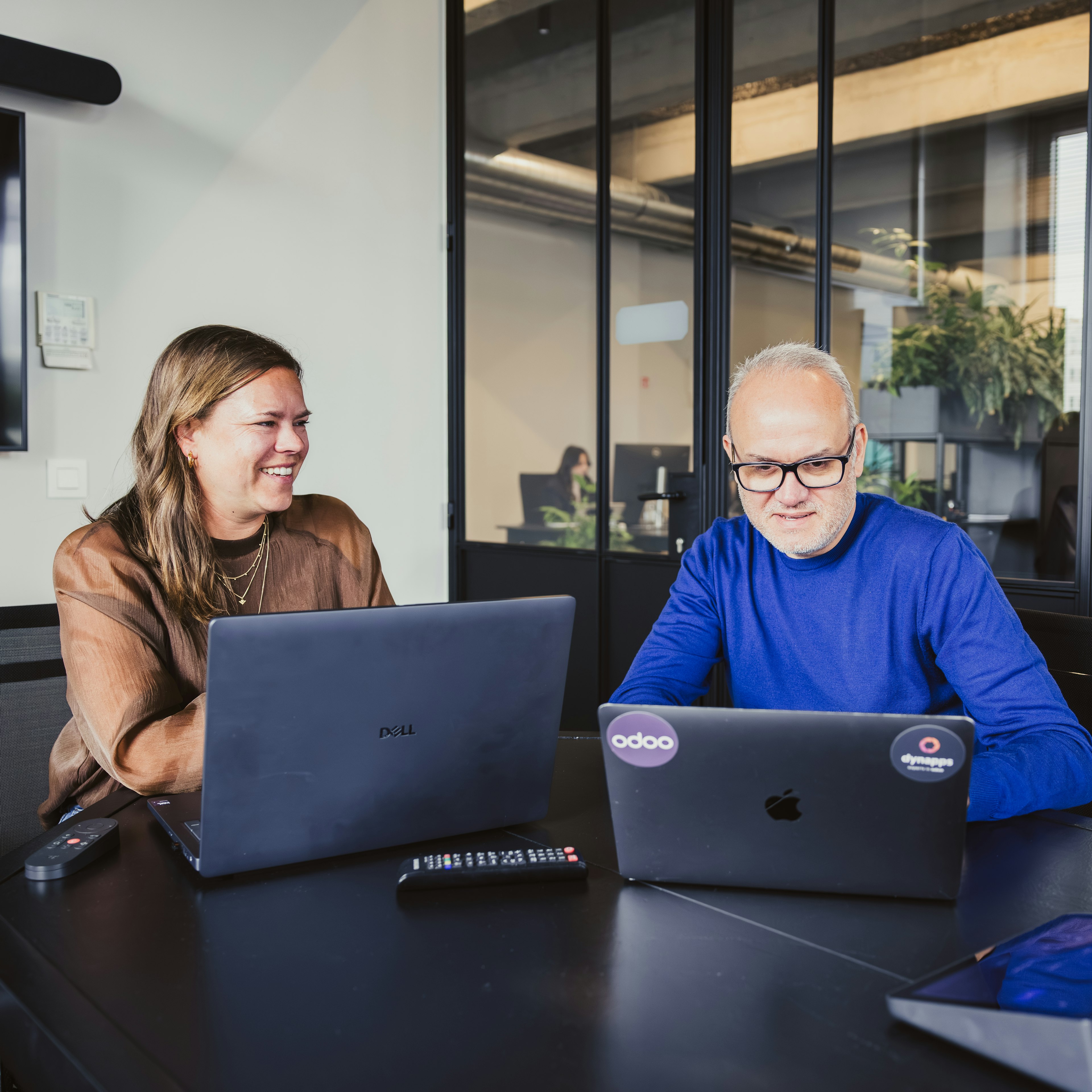
Growth makes it worse, not better.
Each acquisition adds another system, another chart of accounts, another integration to maintain. The group gets bigger and harder to see at the same time. The value in a deal leaks away in the months it takes to wire a new entity into the patchwork. The thing that should make the group stronger, scale, quietly makes it slower.
From multiple islands to one platform.
The right partner does not force one rigid template on every entity. We design a single platform with a shared core and room for what each entity genuinely needs differently. Intercompany, consolidation, and group reporting are built in from the start, not added later. We roll out entity by entity, so the group keeps running while the picture comes together.
What this looks like in practice
Groups that became one company.
- Professional services

Professional services
One Odoo across three Obiz Group entities
A listed French loyalty group put three entities on one Odoo within a year of an acquisition. The acquirer extended the platform its target had already chosen, covering accounting, purchasing and sales.
- Retail & wholesale

Retail & wholesale
One Odoo platform across three webshops and fourteen markets
Dutch van-accessories specialist, three companies, 14 European countries from one warehouse in Veghel. Replaced three ERPs and three middleware components with one Odoo platform across back office and webshops.
- Energy & utilities
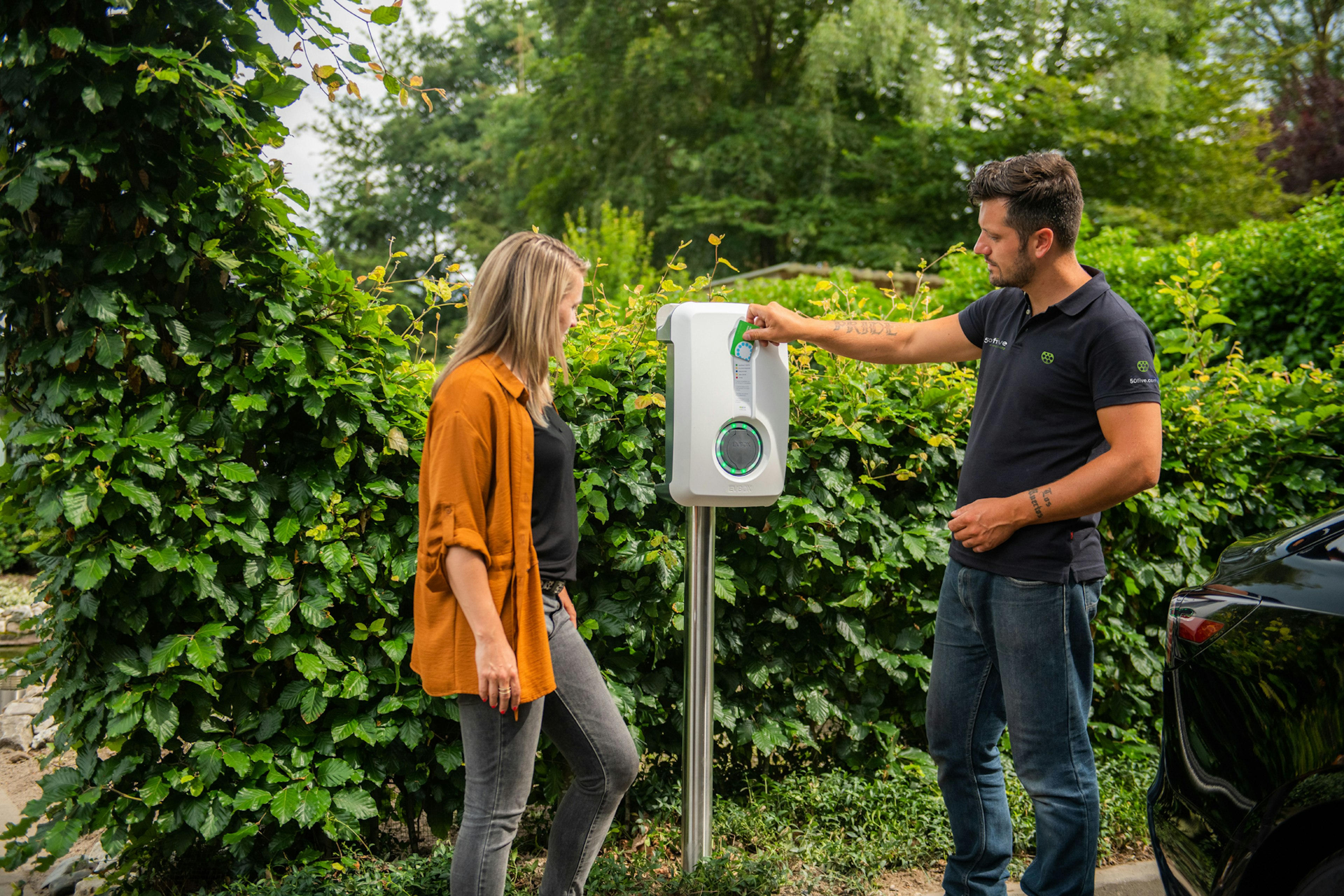
Energy & utilities
One Odoo backbone, twelve European countries, one platform
50Five carried one Odoo platform from a 2016 Dutch smart-home distributor to a B2B EV charging operator running 600,000+ charge points across twelve European countries, without forking the system.
Related challenges
Other patterns we see often.
Sound familiar?
Replacing a legacy ERP
A 10-to-20-year-old system at the centre of operations, too critical to touch.
Untangling disconnected systems
Production in one system, CRM in another, finance in a third. Nobody trusts the numbers.
Scaling for the next phase of growth
The business is ready to grow. The infrastructure is not.
Recovering an Odoo that is not working
Already on Odoo. Still not getting what was promised.
Same challenge, different reality
How this pain shows up across industries.
The consolidation problem is universal in mid-market groups. The shape it takes is not. Same root, different symptoms.
Manufacturing
Production floor, finance, and supply chain in the same language.
Professional services
Projects, people, and P&L, running off one model.
Retail & wholesale
Brick, click, and warehouse. One stock. One view.
Logistics
Multi-warehouse, multi-country, one operational backbone.
Energy & utilities
Installers, operators, producers, cooperatives. Each on Odoo, shaped to fit.
Laboratories
From sample to result. LIMS for in-house and commercial labs.
Food & beverage
The full food and drink chain, traceable from raw material to shelf.
Pharma & biotech
Batch traceability, GxP, and quality, ready for any audit.








The questions before you commit.
Bringing your company onto one platform raises real questions
about disruption, cost, timing, and what happens to the way
each entity works today. Here are the ones we hear most,
answered straight. If yours is not here, ask us directly.
It depends on how many entities, how different they are, and the state of the data in each. The blueprint phase maps the entities, their charts of accounts, and where they genuinely differ, and usually runs four to six weeks. From there we roll out entity by entity rather than all at once, so the first entity can be live in a few months while the rest follow on a planned sequence. You get a realistic timeline per entity in the blueprint, not one number for the whole group pulled before anyone has looked.
No, and usually they should not. A big-bang cutover across every entity in one weekend concentrates all the risk into a single moment. We roll out entity by entity, starting with one that gives a clear early win, then applying what we learn to the next. The group runs on a mix of old and new during the transition, with consolidation reporting bridging the two until everyone is on the platform.
There is no list price, because no two groups are the same. The main drivers are the number of entities, how different their processes and charts of accounts are, the number of currencies and languages, the data to migrate per entity, and how much each entity needs configured differently. A shared core across entities keeps cost down: the more they run on the same standard setup, the less there is to build and maintain per entity. The blueprint puts a concrete number on the table before you commit.
Not every difference between entities is real. Some are just history, different habits that grew up around different old systems, and consolidation is a chance to drop them. The ones that matter, a country's tax and compliance rules, an entity's genuinely different operating model, stay. We design a shared core for everything the group should do the same way, with room for the local detail that has a real reason to exist. The goal is one platform, not one rigid template forced on every business in the group.
Odoo is built for multi-company groups. One platform runs many legal entities, each with its own chart of accounts, currency, and tax setup, while sharing master data like products and customers where it makes sense. Intercompany transactions flow between entities automatically instead of through manual journals. Group consolidation and reporting work across entities, so the group close stops being a manual scramble every period. The same structure makes the next acquisition easier to absorb: a new entity is added to the platform, not stitched into a patchwork.Odoo is built for multi-company groups. One platform runs many legal entities, each with its own chart of accounts, currency, and tax setup, while sharing master data like products and customers where it makes sense. Intercompany transactions flow between entities automatically instead of through manual journals. Group consolidation and reporting work across entities, so the group close stops being a manual scramble every period. The same structure makes the next acquisition easier to absorb: a new entity is added to the platform, not stitched into a patchwork.
We do one thing. Odoo, and only Odoo. A generalist implementer spreads across SAP, Microsoft Dynamics, NetSuite, and others, bringing general ERP knowledge to each. We bring depth in one. Every project teaches the next. Every custom build is reviewed by someone who has solved the same thing before. Our developers think Odoo-native, not retrained from another system. For a multi-entity consolidation, that focus is the difference between a partner figuring out Odoo's multi-company model on your group and one that has done it many times.
A first conversation to understand your challenge and context: how many entities, what each runs on today, and where the lack of a single view hurts most. We tell you honestly whether Odoo fits the group and what a realistic path looks like. If there is a match, the next step is a tailored demo built around your structure, then a blueprint proposal. If there is not, we will say so.
Ready to consolidate your operations?
A first conversation about what was built, what is not working, and what it would take to put it right. An honest read from people who have taken over and fixed stalled Odoo projects before.