Odoo for industrial bakeries: bread, pastry, biscuits and frozen dough.
Up to 1,500 items, a shelf life of two to seven days, and a Friday that runs differently from a Tuesday. Recipes that move with your raw materials, allergens across shared lines, private-label requirements per retailer and a plan built around your ovens. We set that up in Odoo from day one, so your platform holds when the audit comes and when a new private-label customer signs.

Trusted by food producers in the Netherlands and Belgium


Where it gets stuck
Recipes, bake planning and shelf life, in one place.
Recipes under control
One dough, ten end products, three private-label variants. The recipe is a bill of materials, and every change runs through a change order with approval and version history. So with every reformulation you know which version was baked on which day.
A bake plan per day
Per product and per bake day you see what has been ordered, what you expect on top and what is still to bake. You release the day and the production orders follow. No spreadsheet to rebuild every afternoon.
Shelf life and allergens built in
A best-before date of a few days drives the picking: first expired, first out. Allergens sit in the product specification and carry through to the label.
What we deliver
From bake plan to roll cage.
Daily bake planning
Your planner works in one screen: per product and per bake day the ordered quantity, the forecast and what is still to bake. The forecast comes from a fixed pattern per weekday, so you adjust instead of type. You release the bake day, the production orders follow, and the bake list goes to the floor. If an order comes in after release, you only bake the difference.
Recipes and version control
The recipe is a bill of materials, with by-products and losses built in. A recipe change runs through a change order with approval, and previous versions are kept. Per production order you see the actual cost against the planned cost, so a more expensive batch of butter shows up on the order and not at month-end close.
Batch and lot management
Every batch of flour, seeds or filling gets a lot number at receipt. That lot follows production, packing and delivery, forward and backward. A lot that fails quality control gets a status and goes no further until someone releases it. A recall starts with one question to the system, not with three people and a folder of delivery notes.
Allergens and specifications
Ingredients, allergens and nutritional values sit in one specification per product, and only an approved specification goes to the label. On a changeover on a shared line you set a control point that blocks the next production order until cleaning is signed off, with name and time.
Shelf life and FEFO
Expiry dates sit at lot level and drive the picking: first expired, first out. If a supermarket asks for a minimum remaining shelf life on delivery, you record it per customer and the reservation takes it into account. Expired product runs into a block, not into a customer.
HACCP and quality
Your HACCP checks are control points on the line, with a norm and a tolerance, linked to the batch. Whoever rejects puts the lot in quarantine and the rest of the flow knows. You follow up deviations and corrective actions in the same system. We do not write your HACCP plan, your quality manager does.
Labels
The label reads from the approved specification. Nothing is retyped. Consumer label, internal batch label and logistics label come from the same data, in the languages you need. When an ingredient changes, the label changes with it. The label module already runs in production at a Dutch bakery.
EDI with supermarkets and wholesale
Orders, delivery notes and invoices go in and out the way your large customers ask, with GS1 codes where needed. We build the connections you need and add new ones when a customer comes on board. Smaller customers order through a customer portal.
On the production floor
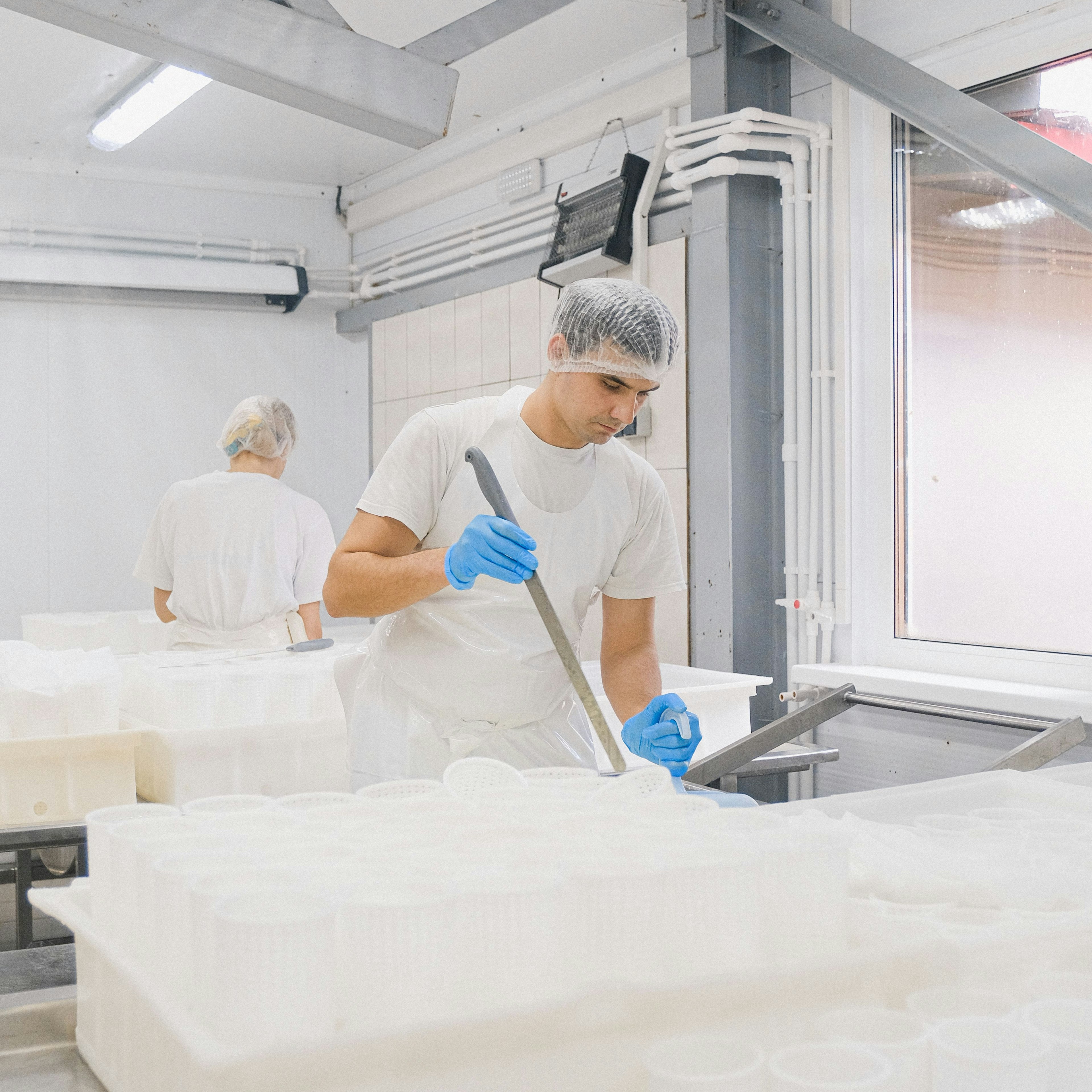
Work orders, registration on the floor and automatic consumption of raw materials when production is reported. The day's bake list is ready for your shift. If you need a full MES with machine connections, we say so upfront: Odoo covers part of it, we connect the rest.
A proven approach, with a team you know.
Discovery
We map your production, recipes, items, order cut-offs, shelf-life rules and retailer requirements. What fits standard Odoo, what does not, and what your process itself needs to change. We say that last part in discovery, not during go-live.
Configuration
Bake planning, recipes, FEFO, batch and lot tracking, allergens, labels, HACCP checks and EDI, set up the way your bakery actually works. Your consultant knows bakery practice from previous projects.
Go-live and training
We test against real recall drills, product changeovers and weekend peaks. Your people are trained on their own work, not on a demo database.
Continuous improvement
New private-label customers, extra EDI partners, a second production site. We stay on board after go-live.

Using Odoo feels as intuitive as using a tablet. That ease of use makes a huge difference when you're going live in countries like Kenya or Korea with teams that have never worked with an ERP system before.
Luc Van Mulders
Regional Application Manager at PuratosAt a glance
Dynapps in numbers.
Gold
Odoo partner
50+
F&B references
900+
references worldwide
280+
Odoo experts
ISO 27001
certified
Challenges
The challenges we see most often.
Outgrown your accounting package
The system that helped the bakery grow is now holding it back. Exact with spreadsheets for recipes, planning and lot numbers on the side.
Recall in hours, not days
A recall that today runs on paper and memory. Retailer audits and EU rules raise the bar every year.
Private-label and clean-label requirements
Retailer charters, reformulation, and a label that differs per retailer.
What bakeries ask us.
Yes. Production, planning, traceability, quality and accounting run on one platform, with bills of materials, lot tracking, FEFO and quality control points as standard. On top of that we bring modules we build for the food industry, such as daily bake planning and the label module. Whatever you still need custom, we name in discovery.
From the orders and a pattern per weekday. Per product and per bake day you see what has been ordered and what you expect, you adjust where needed and release the day. The production orders and the bake list follow. You look at least two weeks ahead, so you plan weekends in time.
Expiry dates sit at lot level and drive the picking: first expired, first out. Anyone who tries to ship an expired lot runs into a block. If your customer requires a minimum remaining shelf life on delivery, the reservation takes that into account.
Allergens sit in the product specification and carry through to the end product and the label. For the line itself you set a control point that blocks the next production order until cleaning is signed off, with name and time.
Every batch received gets a lot number that follows every operation and every delivery. Backward, you go from a roll cage to the supplier of the flour; forward, from a raw material lot to every customer who received it. A mock recall is one search.
Yes. Orders, delivery notes and invoices run through EDI with the customers who ask for it, with GS1 codes on your items. We build each connection to fit that customer, and add new ones when a customer comes on board.
Partly, and we would rather say that straight away. Odoo covers work orders, backflush, quality control points and registration on the floor. If you are looking for a full MES suite with machine connections and real-time OEE, you will need to look further or connect one. In discovery we decide which of the two you actually need.
We start from what actually happens today, not from what the old system can do. In discovery we record which spreadsheets have a real function and which exist because the system could not do it. We build in the first group and drop the second.
Yes. Orders from a bakery ordering system, a webshop or a B2B portal land in the same order book as your EDI orders. Every connection is custom work. In discovery we look at which ones you actually need.
Yes. Every shop is its own location in Odoo. Deliveries from the bakery and consumption in the shop are booked on that location, so you see per shop what is there and what has gone. If you use the Odoo point of sale, sales count straight away.
Ready to put your bakery on one platform?
We listen first to how you work today. Then we draw up a concrete plan together, with the gaps named.