What is Odoo.sh? And where it fits when you host Odoo.
Where Odoo runs is one of the most important technical decisions you make. It is not just "where the data sits". It decides how fast Odoo responds, how reliable it is, and how much you can change. Most companies weigh three options: Odoo.sh (the official platform), Odoo Online (simple SaaS), or a server they run themselves. This guide breaks down Odoo.sh and where it fits.
What is Odoo.sh, and why do developers like it?
Odoo.sh is a PaaS (platform as a service) built and maintained by Odoo SA. Its strength is not raw power. It is the workflow. It removes the friction between writing code and getting it live.
Link a GitHub repository to Odoo.sh, and every git push can spin up an independent test environment, install Python dependencies, and run automated tests before anything reaches production.
CI/CD in plain language
Odoo.sh includes CI/CD tooling. What that means:
CI (continuous integration). Automatic quality control. Every time a developer adds code, the platform checks it does not break what already works.
CD (continuous deployment). If the code passes the check, it moves to the server automatically, which reduces manual steps and human error.
Where Odoo.sh fits, and where it stops.
Odoo.sh is excellent for development. For some production setups it stops short, and the reason is control.
Custom code, yes. System-level, no. You can install custom Python packages, but not system packages or your own tools.
Limited tuning. Configuration stays inside the settings Odoo.sh exposes. You buy workers (process threads), but you do not choose the hardware underneath.
A shared platform. For a webshop with a large catalogue or high traffic, page speed matters. On a shared platform, resources are shared, which can add latency at peak times.
No infrastructure access. You cannot set custom firewall rules, run third-party software next to Odoo, or open private connections to your machines.
None of this makes Odoo.sh a bad product. It is the right tool for a clear job. It just means that a business needing full control of the environment will hit its edges.
The four ways to host Odoo.
Odoo Online. Standard Enterprise apps, no room for custom code or extra software. Simple, but fixed.
Odoo.sh. Room for custom development, but the platform around it is fixed.
Self-hosted. Full control, but uptime, backups, and scaling become your team's problem.
Managed hosting. Full control plus a team that runs the platform for you. This is where DynCloud sits.

DynCloud: managed Odoo hosting by Dynapps.
DynCloud is the Dynapps managed hosting service. It runs on a managed Kubernetes cluster designed for Odoo, and it takes the good part of Odoo.sh (native CI/CD) while giving you the control Odoo.sh holds back. See the full picture on our Odoo hosting service page.
High availability by design
Automatic fault tolerance and load balancing, so a single failure does not take you down. Every change moves through a full DTAP path (development, testing, acceptance, production) before it reaches your live system. Backups run several times a day, daily copies kept for a month. Availability target 99.999%.
Full control, and room to grow
Direct access to your servers and containers: IP whitelists, VPN tunnels, a direct database proxy, third-party connections. When load spikes at month-end or during a bulk import, we burst CPU, memory, and disk, then scale back. Resources grow with you, vertically and horizontally.
Security and data location
Your data is processed and stored within European borders, under a data processing agreement, protected to a recognised security standard. Dynapps is an ISO 27001 certified organisation.
Managed by the team that knows your Odoo
Hosting and Odoo are not run by two companies that have never spoken. The team managing your infrastructure is the team that built your implementation. When something needs a fast response, you are not waiting on a third party who has never seen your setup.
Already on Odoo Online or Odoo.sh? Moving to DynCloud is handled as part of the engagement, or as an Odoo recovery and migration, with your DTAP environments in place before you switch.
Discover what Odoo can do for your business.
An initial meeting to see if we're a good fit, followed by a demonstration tailored to your processes.
More posts like this

6-minute read
Peppol mandatory, e-reporting from 2028: how to prepare.
Since 2026, e-invoicing via Peppol is mandatory in Belgium. From 2028, your invoice data goes to the tax authority in near real time. What that asks.

3-minute read
Interview with Leïla Chojnacki, Deputy CEO and CFO of the Obiz Group
3 min read
Odoo 19.4: What's new? Key features and essential takeaways
Odoo 19.4 (July 2026) is a quarterly update: connection to AI agents via MCP, voice interaction, editable margins, two-tier duplicate detection, stock aging report, and continuous production.
3 minute read
AI in Odoo: What are the requirements for enabling it?
The question "Do we have the right to use Odoo's AI?" often has a simpler answer than expected.

4 min read
Certified by Dynapps: bringing Odoo expertise to local SMEs in France
Dynapps France is rolling out the Certified by Dynapps label, a program that gives small and medium-sized businesses local Odoo expertise and gives independent consultants a structured way to grow around Odoo.
4 min read
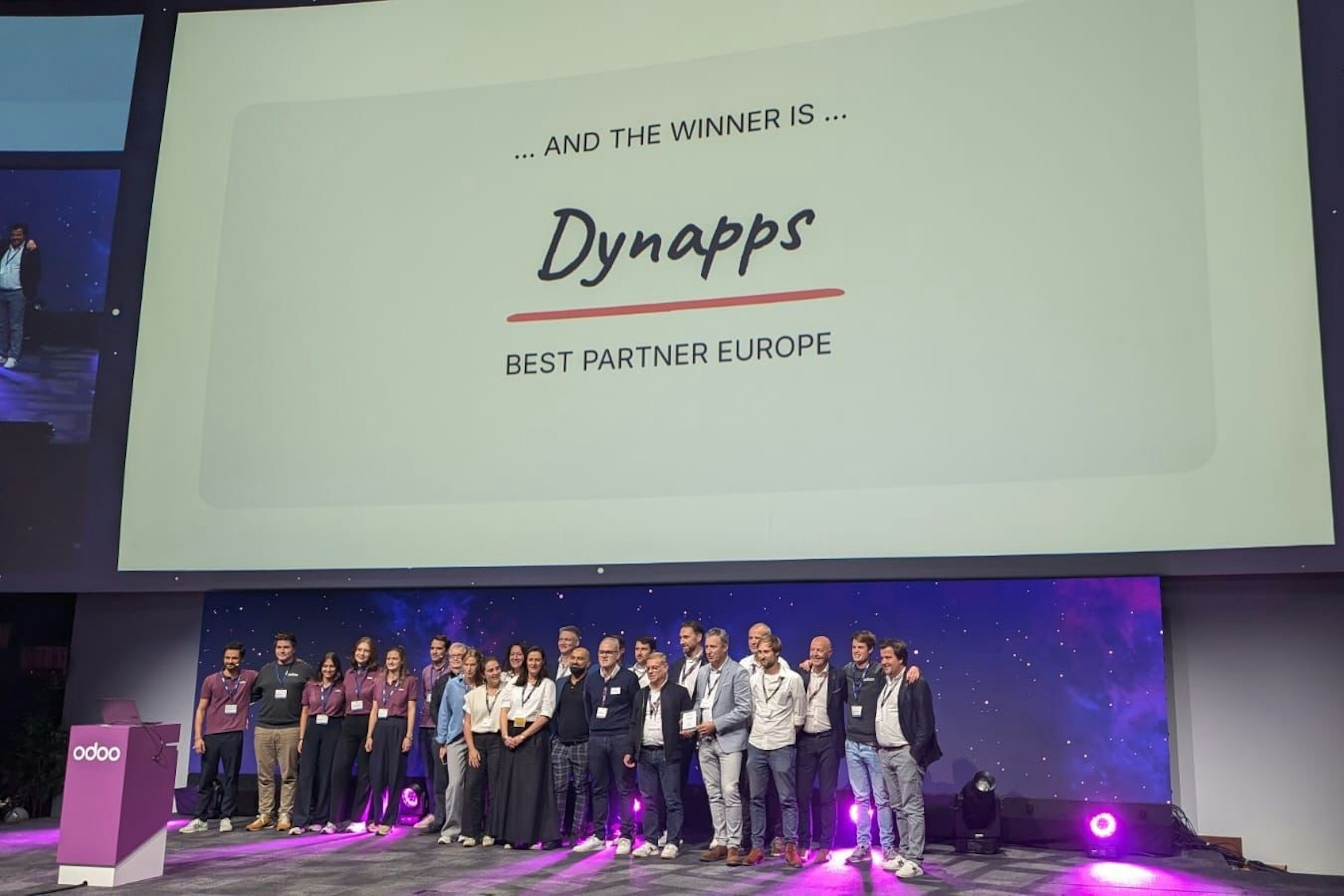
Dynapps named Best Odoo Partner in Europe
At the Odoo Experience Days in Brussels, Dynapps won the title of Best Odoo Implementation Partner in Europe, with former CEO Karel Hendrickx and the team collecting the award on 2–4 October 2024.
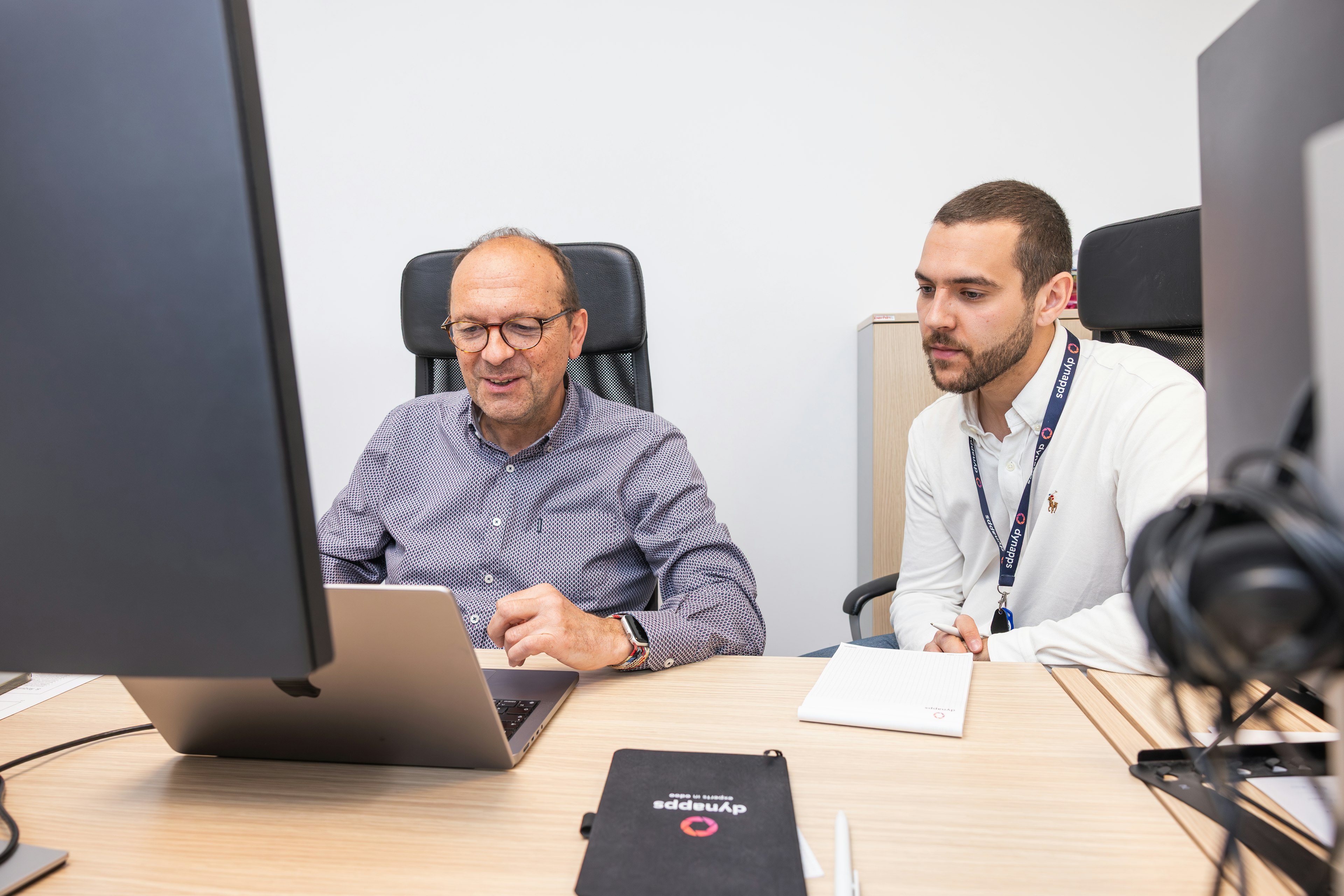
3 min read
Dynapps recertified to ISO/IEC 27001:2022 with zero non-conformities
Dynapps holds the ISO/IEC 27001:2022 certificate for its information security management system across its Belgian and Dutch entities. The January 2026 recertification audit closed with zero non-conformities.
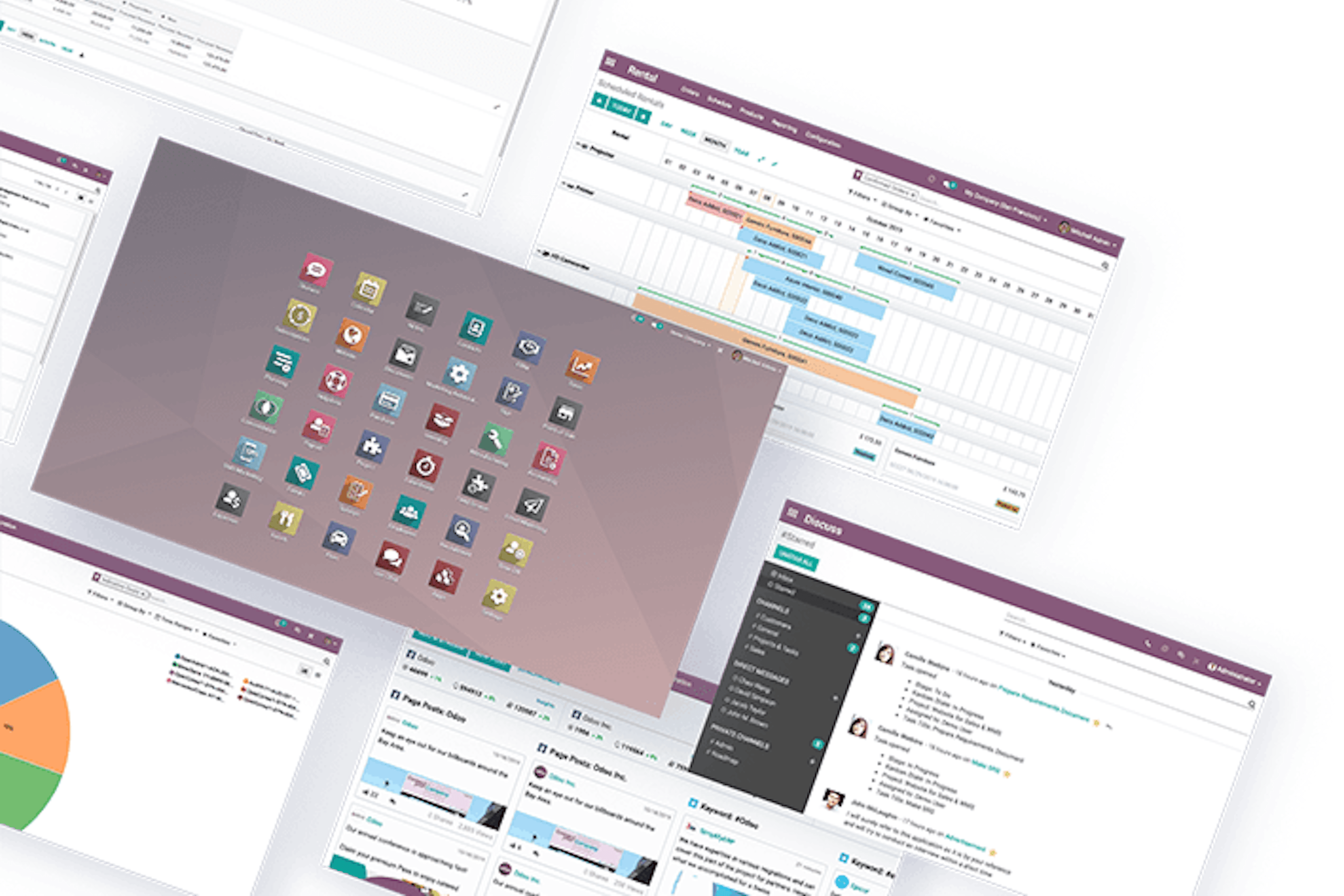
4 min read
ERP vs CRM: what is the difference?
In a competitive market, businesses lean on software to operate efficiently. Two systems come up most: ERP and CRM. They serve different purposes, and they often work better together than apart.
6 min read
Odoo or Exact: which ERP fits your SME?
Choosing an ERP changes how the business runs. Odoo and Exact both target SMEs, but they solve different problems. This is a side-by-side read on functionality, flexibility, support, and where each one fits.
4 min read
Odoo vs AFAS: comparing two ERP systems built for SMEs in NL and BE
A side-by-side comparison of Odoo and AFAS, two ERP systems built for SMEs in the Netherlands and Belgium. It weighs flexibility, user-friendliness, support, integrations and cost per system.