Digital transformation: what it is, and how to actually do it.
Digital transformation is a worn-out phrase. Behind it sits a real question: does your business still run on disconnected tools, manual steps, and spreadsheets nobody fully trusts? This is what digital transformation actually means, why it matters, how to do it step by step, and the mistakes that sink it. Without the buzzwords.
What is digital transformation?
Digital transformation is using technology to change how you operate, serve customers, and make decisions. It is easy to confuse with two smaller things, so it helps to separate three levels:
Digitisation turns analog into digital: a spreadsheet instead of a paper folder.
Digitalisation uses digital tools to run an existing process, like sending invoices by email instead of post.
Digital transformation changes the process itself, and often the way the team works, so the business runs differently, not just on newer tools.
One example makes it concrete. Scanning invoices is digitisation. Connecting sales, stock, and accounting so an order updates all three without re-keying is transformation.
Why it matters
The payoff is concrete, not abstract:
• Less manual work. Automating repetitive steps cuts time, cost, and errors, and frees people for work that matters.
• Better decisions. One source of data instead of five means you decide on facts, not on the version someone exported last week.
• A better customer experience. Faster answers, fewer mistakes, and communication that does not fall between systems.
• Room to adapt. When the market shifts, a connected business changes course faster than one held together by manual work.
How to do it, step by step
1. Assess where you are
Start with an honest look at how work actually happens. Which processes are manual, where does data get re-entered, where do things stall? Talk to the people doing the work, not just the managers describing it. Name the gaps between what you have and what you need.
2. Set clear goals
Vague ambition goes nowhere. Set specific, measurable goals with a deadline. "Cut order processing time by 30% within six months" beats "become more digital". Pick the areas with the biggest impact first, usually the ones that touch cash, customers, or capacity.
3. Choose the right tools
This is where an ERP earns its place. An ERP like Odoo pulls sales, purchasing, inventory, accounting, and CRM into one system, so data flows instead of getting copied. Add automation and, increasingly, AI for the decisions that used to eat hours. Read why we choose Odoo.
4. Bring your people with you
Transformation is a change of habit, not just of software. Explain why it matters, train the people who will use it every day, and give them support through the switch. Resistance usually comes from people who were not consulted, not from people who cannot learn. Tools do not transform a business. People using them well do.
5. Roll out in phases
Do not switch everything at once. Start with a pilot, learn, adjust, then widen. Make sure new tools connect cleanly to what you keep, so daily work is not disrupted while you change the engine.
6. Measure and keep improving
Track a few clear numbers: time saved, cost down, fewer errors, faster response. Transformation is not a project that ends. It is a way of working that keeps improving as you learn what the data tells you.
What it looks like: a manufacturer
Take a mid-market manufacturer running production on one system, stock on a spreadsheet, and finance on another. Sales promises a delivery date without seeing real capacity. Stock counts are a day behind. Finance closes the month four days late because the numbers live in three places.
The transformation is not "buy software". It is connecting those flows: an order checks real availability, production planning updates stock, and finance sees margin as it happens. Same company, same people, fewer islands and far less firefighting. That is what an ERP-led transformation actually delivers.
The mistakes that sink it
• No plan or goals. Buying tools before defining what you want to achieve. Effort fizzles out.
• Leaving people out. Skip the team and you get resistance, not adoption.
• Tech without a strategy. Software that does not match how you actually work solves nothing.
• Trying to do everything at once. A big-bang switch across every process multiplies risk. Phase it.
Where Odoo fits
For most mid-market companies, an ERP is the backbone of the transformation, the system the rest connects to. Odoo is a strong fit because it is modular and adaptable: start with what you need, grow from there, and avoid the licence lock-in of heavier systems. As an Odoo Gold Partner in Belgium, we implement Odoo around how your business actually runs, and integrate it with the tools you keep, across the industries we work in.
Discover what Odoo can do for your business.
An initial meeting to see if we're a good fit, followed by a demonstration tailored to your processes.
More posts like this

3-minute read
Interview with Leïla Chojnacki, Deputy CEO and CFO of the Obiz Group
3 min read
Odoo 19.4: What's new? Key features and essential takeaways
Odoo 19.4 (July 2026) is a quarterly update: connection to AI agents via MCP, voice interaction, editable margins, two-tier duplicate detection, stock aging report, and continuous production.
3 minute read
AI in Odoo: What are the requirements for enabling it?
The question "Do we have the right to use Odoo's AI?" often has a simpler answer than expected.

4 min read
Certified by Dynapps: bringing Odoo expertise to local SMEs in France
Dynapps France is rolling out the Certified by Dynapps label, a program that gives small and medium-sized businesses local Odoo expertise and gives independent consultants a structured way to grow around Odoo.
4 min read
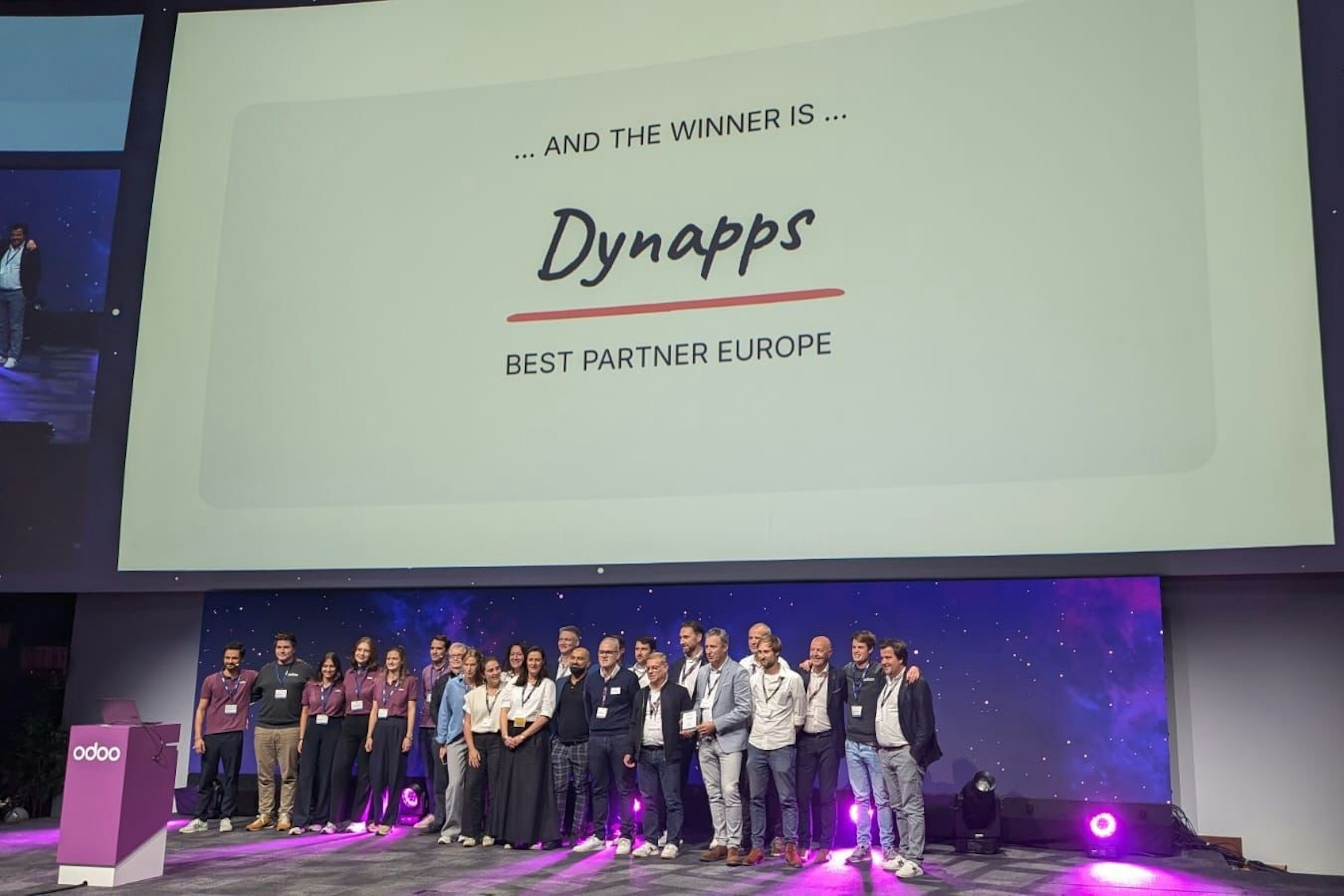
Dynapps named Best Odoo Partner in Europe
At the Odoo Experience Days in Brussels, Dynapps won the title of Best Odoo Implementation Partner in Europe, with former CEO Karel Hendrickx and the team collecting the award on 2–4 October 2024.
3 min read
Dynapps recertified to ISO/IEC 27001:2022 with zero non-conformities
Dynapps holds the ISO/IEC 27001:2022 certificate for its information security management system across its Belgian and Dutch entities. The January 2026 recertification audit closed with zero non-conformities.
4 min read
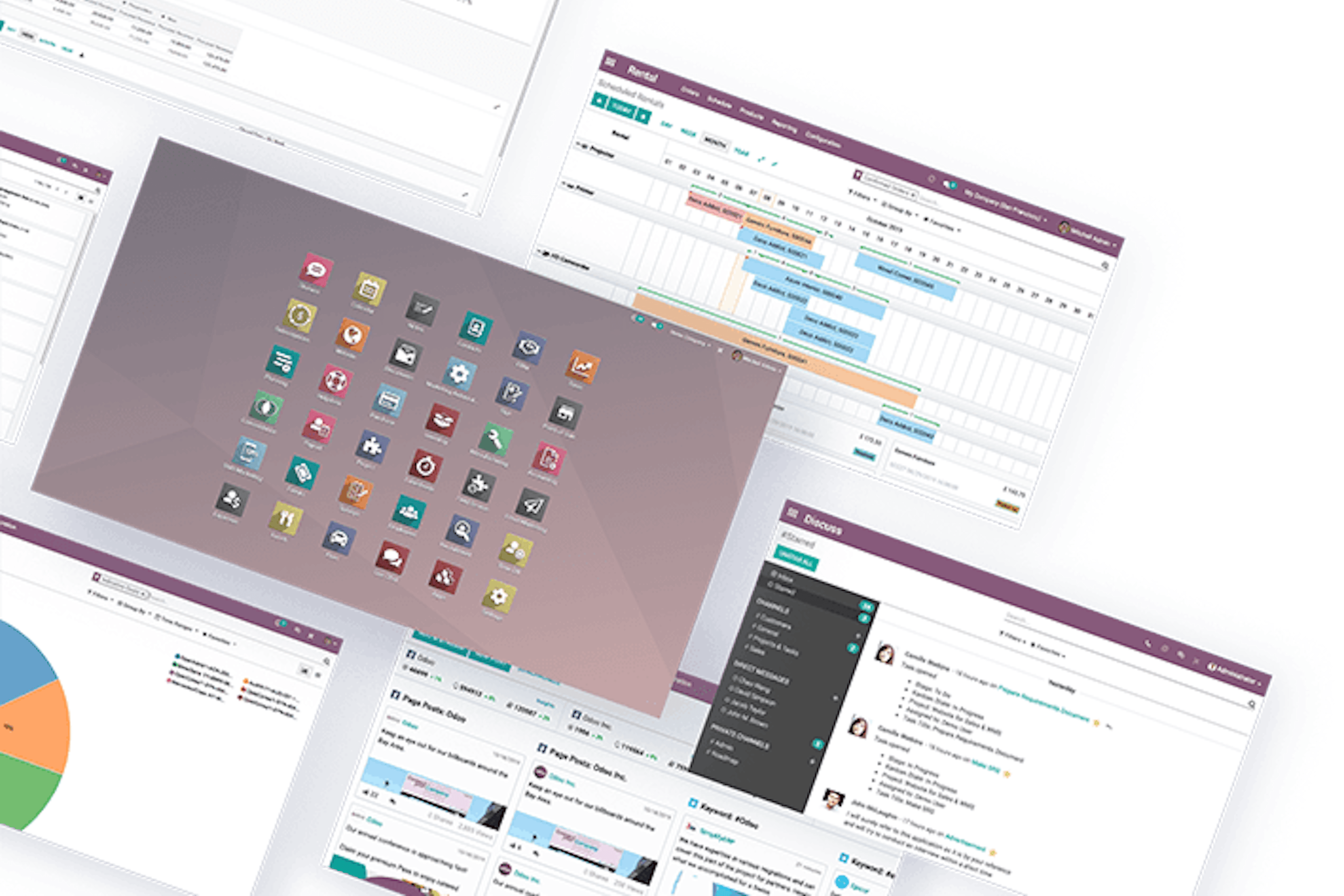
ERP vs CRM: what is the difference?
In a competitive market, businesses lean on software to operate efficiently. Two systems come up most: ERP and CRM. They serve different purposes, and they often work better together than apart.
6 min read
Odoo or Exact: which ERP fits your SME?
Choosing an ERP changes how the business runs. Odoo and Exact both target SMEs, but they solve different problems. This is a side-by-side read on functionality, flexibility, support, and where each one fits.
4 min read
Odoo vs AFAS: comparing two ERP systems built for SMEs in NL and BE
A side-by-side comparison of Odoo and AFAS, two ERP systems built for SMEs in the Netherlands and Belgium. It weighs flexibility, user-friendliness, support, integrations and cost per system.

5-minute read
Odoo vs Dolibarr: which ERP fits your business?
Odoo and Dolibarr are both open-source ERPs, but they aim at different companies. Dolibarr keeps things simple for very small organisations. Odoo goes deeper and scales further. Here is a fair comparison, so you can match the tool to where your business is heading.